Hire Signal:
A new way to define success
Indeed | 2020 - 2021
Designed and implemented a new metric and intervention points, achieving a significant 44% increase in collecting outcomes to determine if employers successfully filled their jobs on Indeed's platform. This process provided valuable insights, instilling trust and confidence among employers and job seekers, and enabled other teams to make data-driven decisions and use machine-learning to enhance the overall user experience on the platform.
MY ROLE
Responsible for overseeing design from vision to execution, including research and content.
MY TEAM
1 UX Designer
1 UX Developer
1 Product Manager
6 Software Engineers
0.5 Product Scientist
Due to a Non-Disclosure Agreement, information on this project is limited.
〰️
Due to a Non-Disclosure Agreement, information on this project is limited. 〰️
THE PROBLEM
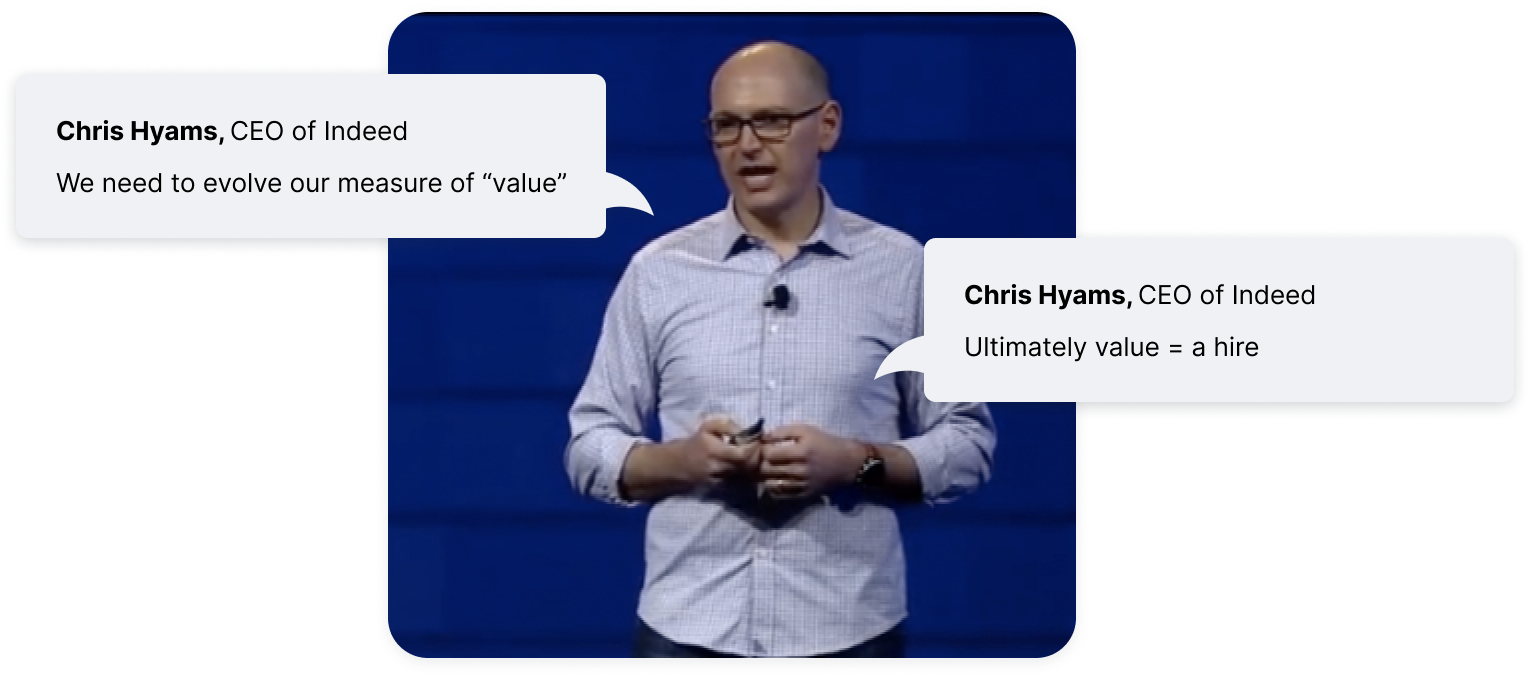
We did not know the outcome (success metric) for the majority of jobs advertising on Indeed. This limited our ability to determine or measure the value we were providing.
OBJECTIVES & GOALS
Understand the outcome of every job to:
Measure the success of job posts
Surface this data to other teams so they can make data-driven decisions
Inform machine learning models to improve the platform
Instill confidence and trust in the platform to employers and jobseekers
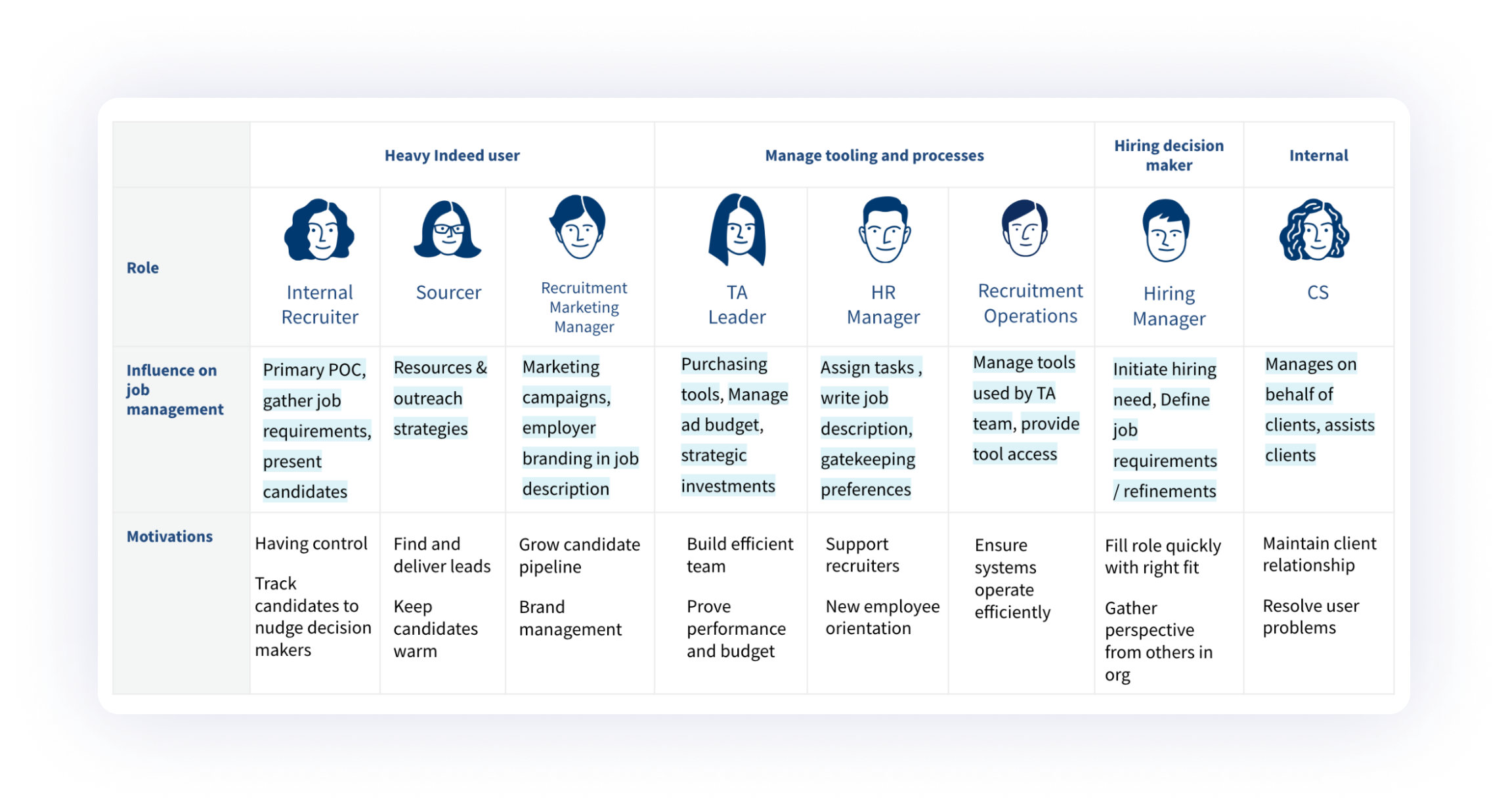
Indeed has a wide range of users from the small business owner to professional recruiters, understanding what their influences and motivations were crucial to begin measurings the value we were providing.
Understand who are our users…
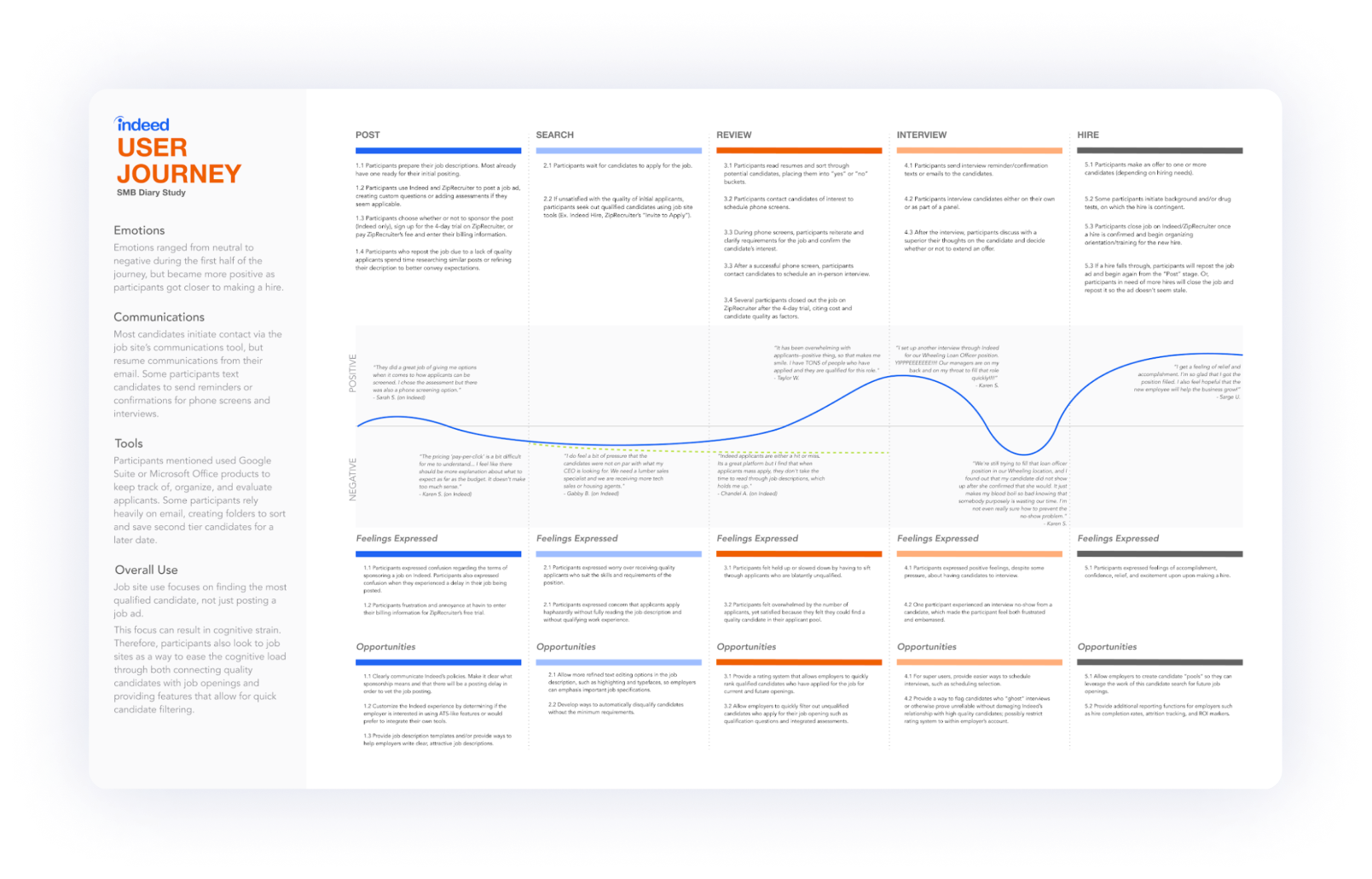
…and what is their journey?
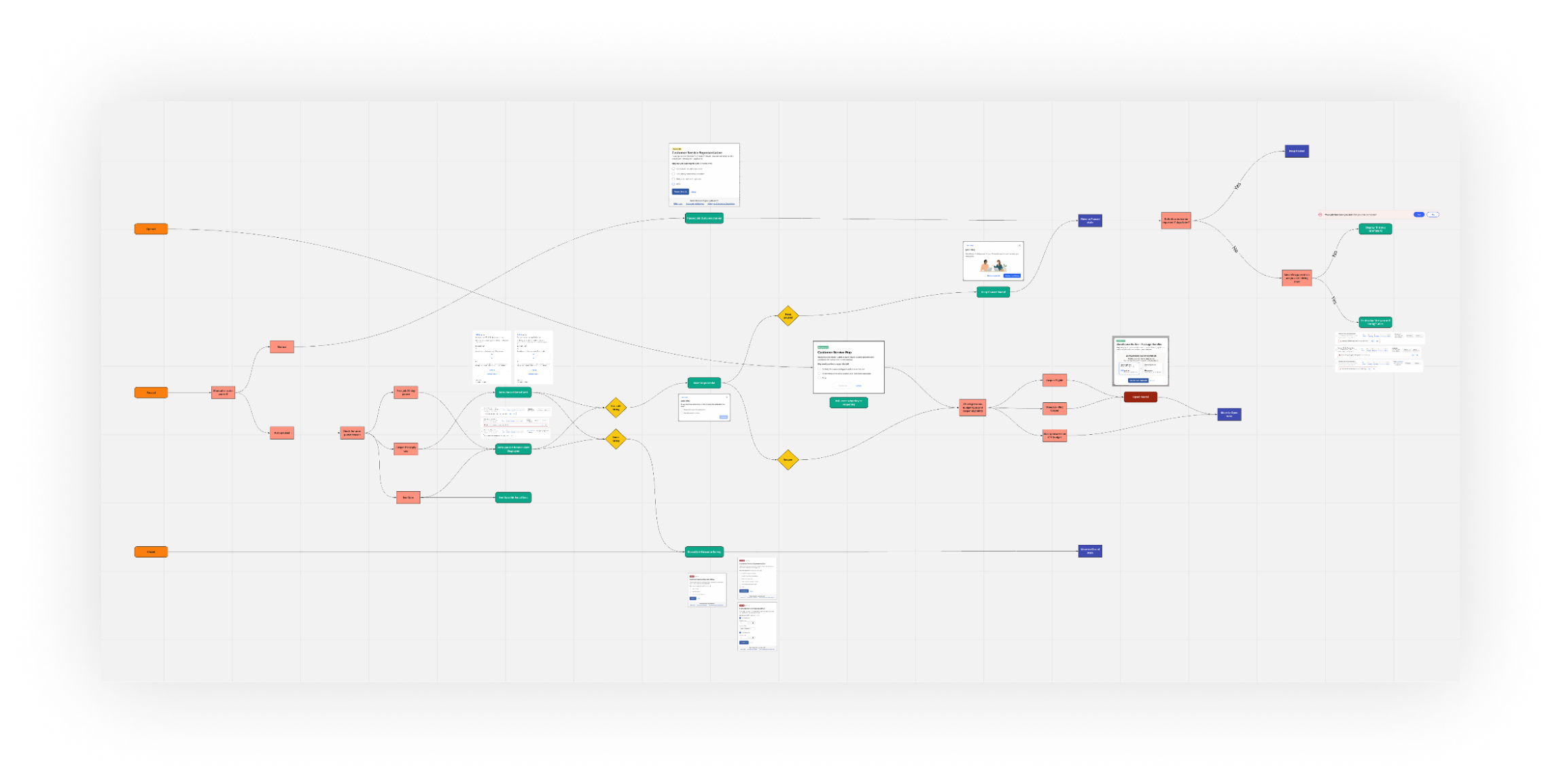
In order to define new intervention points and meet employers in their workflow while being the least disruptive, I had to map out their journey.
BRAINSTORM TOGETHER
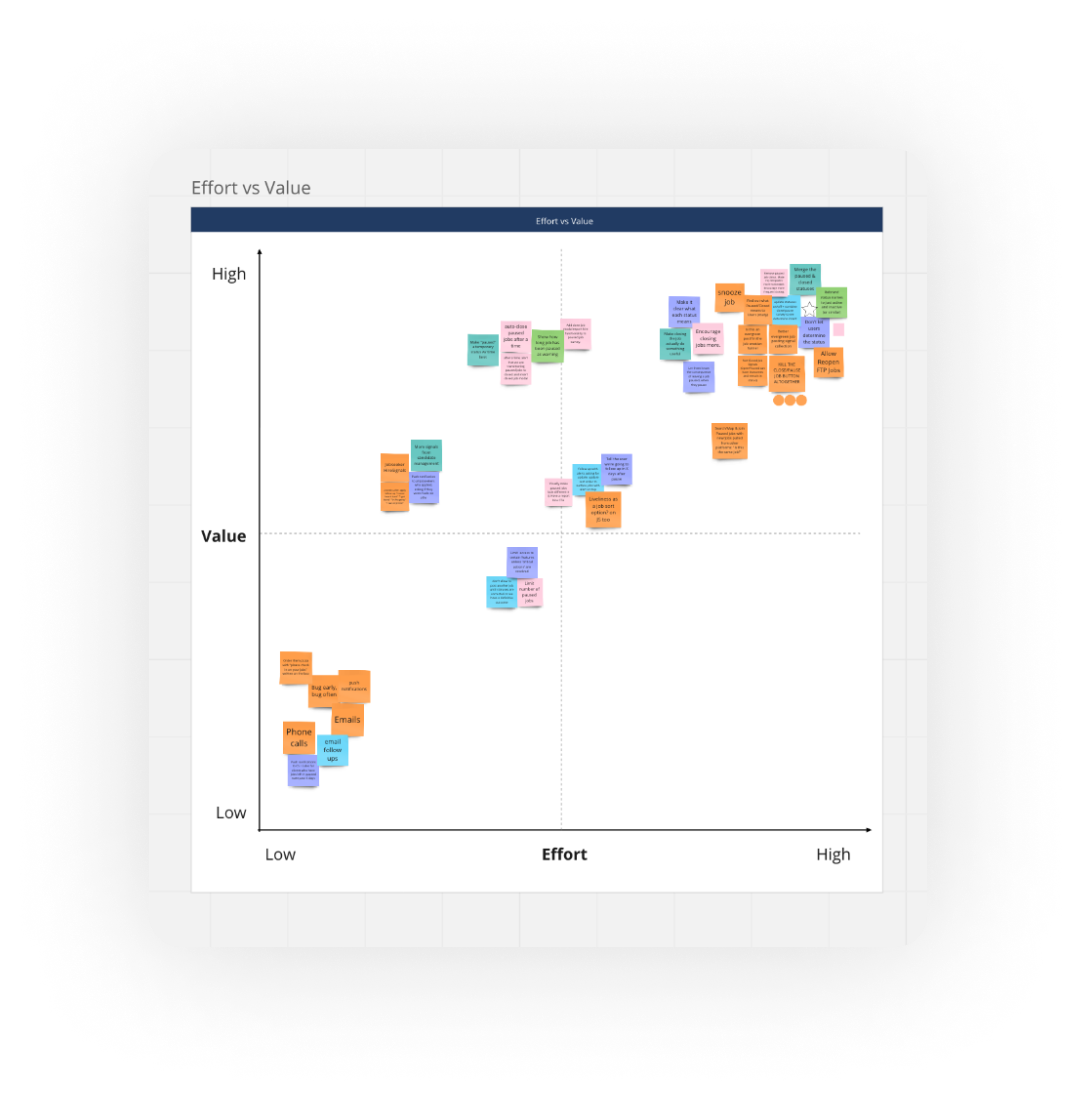
I facilitated several cross-functional brainstorming events to generate HMW (How Might We) statements, develop solutions, and map the Level of Effort vs Value to pinpoint high-priority opportunities worth pursuing.
ITERATE
As this solution was multifaceted, I mapped out the existing intervention points and identified the various opportunities available to us.
RESEARCH & USABILITY TESTING
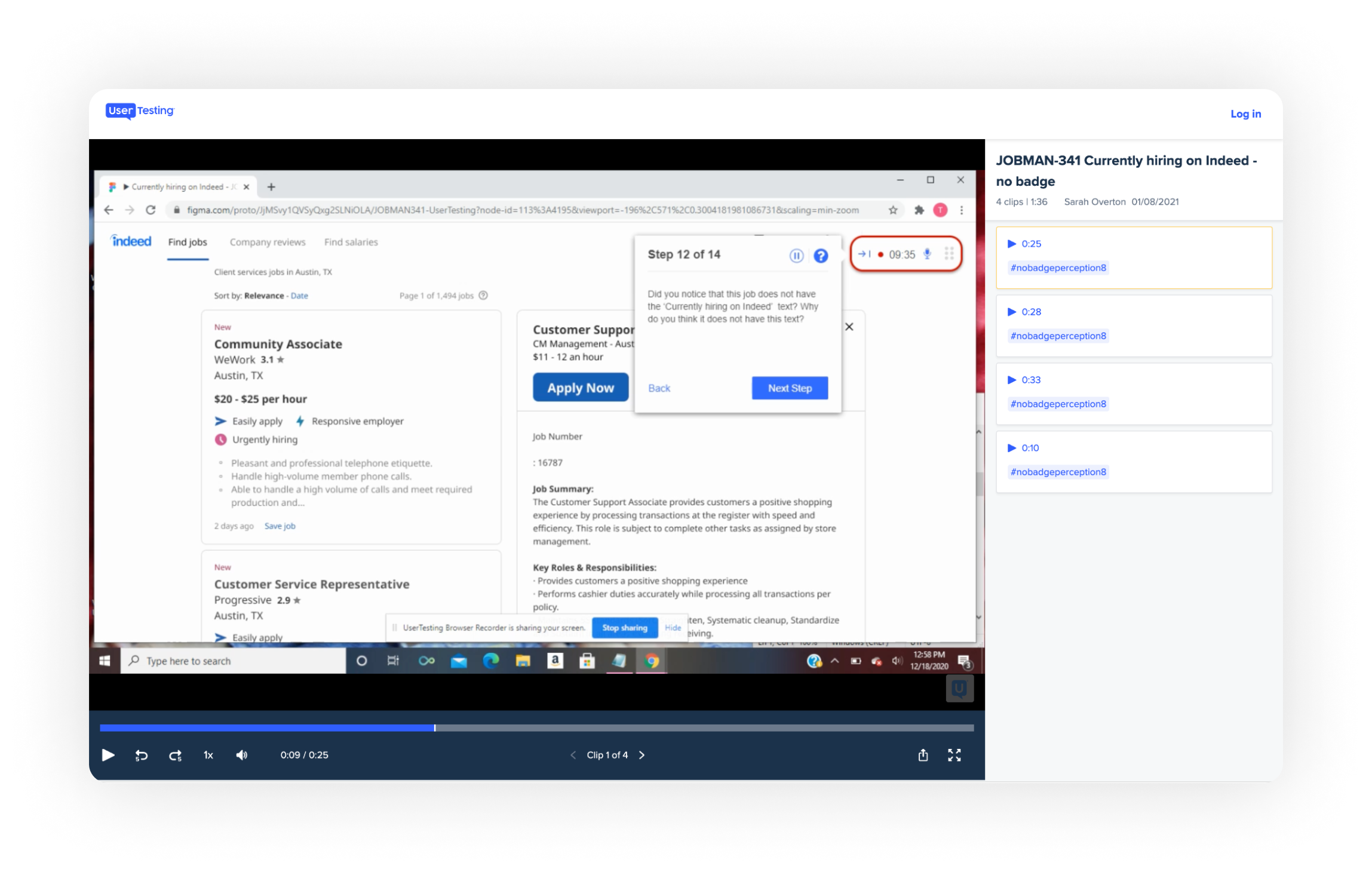
User interviews were conducted to understand why employers did not report outcomes and how we could incentivize them to return to the platform at the end of their hiring process.
SOLUTIONS
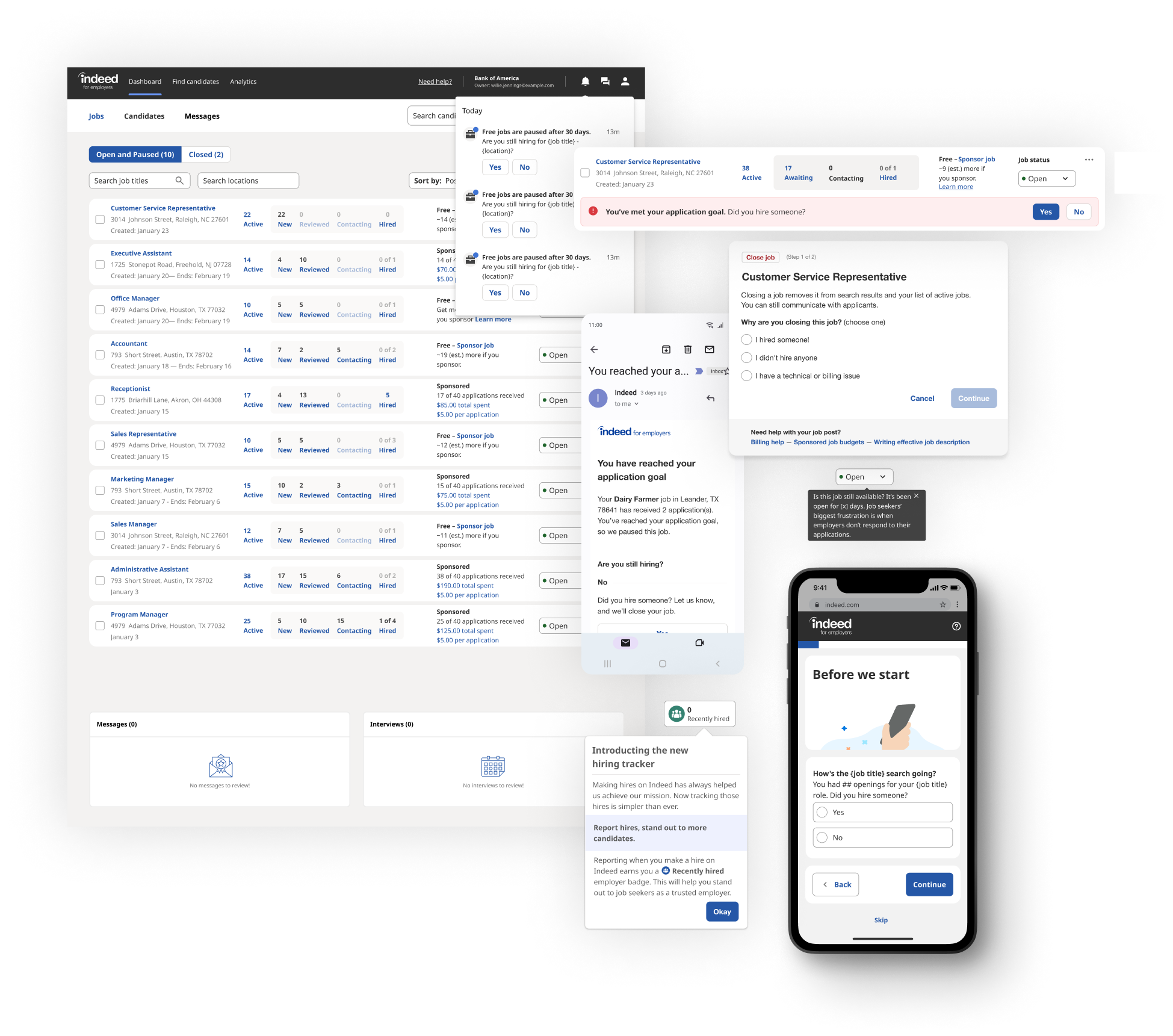
As this was a multi-faceted 1.5 year project there were a multitude of solutions released:
Required job status survey
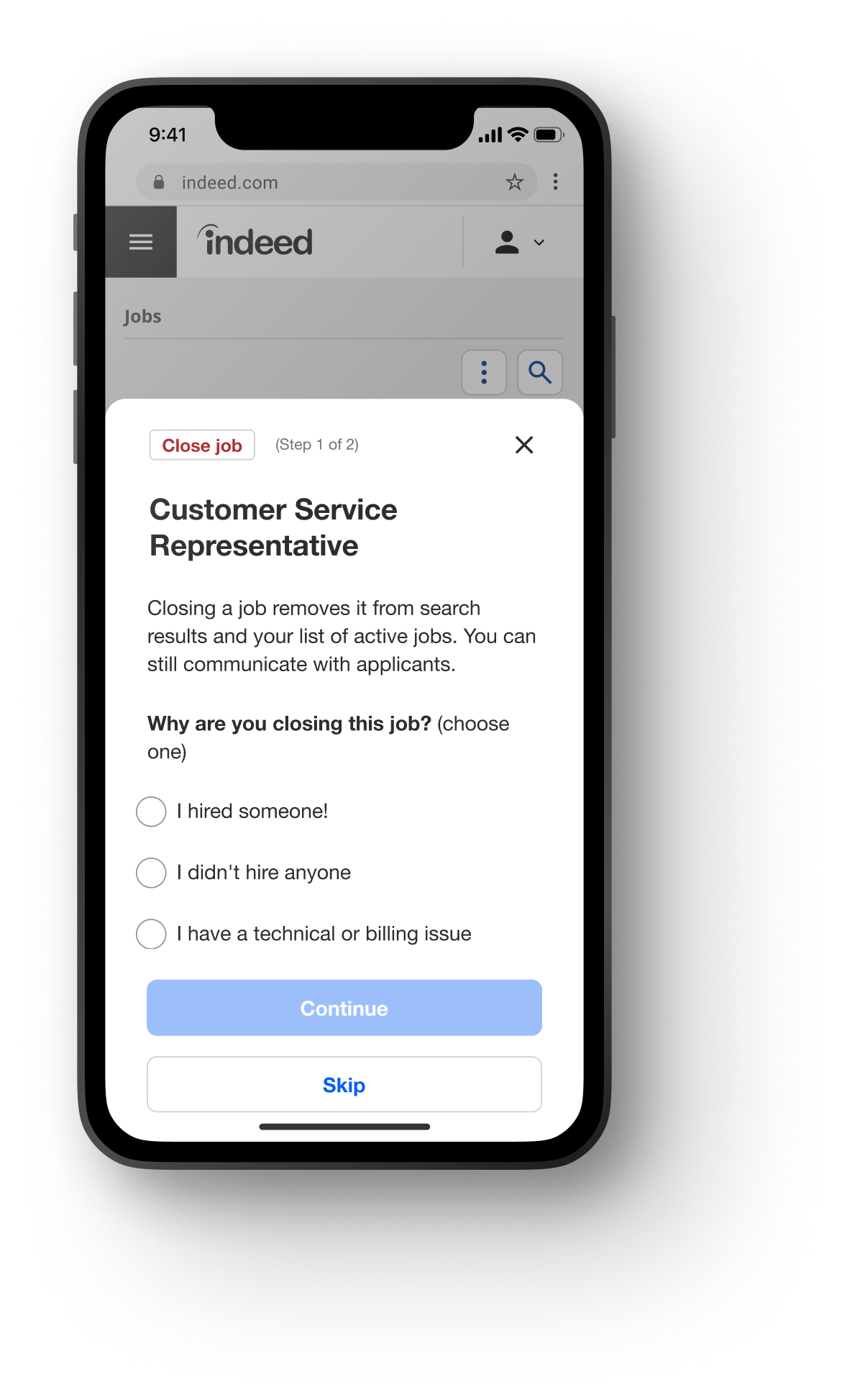
Previously the outcome survey was not required when an employer was closing their job or changing the status.
Report a hire modal
Add consistent functionality to the job dashboard, allowing employers to self-report outcomes at any time.
Funnel intervention
Intercept when an employer went to post a new job, Unlike some of our other intervention points, this one seamlessly fits into the employer’s existing workflow, with minimal disruption.
Autopause based on engagement
The previous logic, autopaused job postings after a fixed amount of time, but I explored a new logic based on how active an employer was on the platform. From this, we were able to send an alert and a notification to collect outcomes.
Hires made badge /tracker
Launched a new account-level ‘Hiring Tracker’ that incentivized employers for reporting a hire or outcome to stand out to job seekers, leading to more applications.
Autopause email
Based on the updated autopause logic around engagement, I redesigned an existing email to align with this updated logic and allow us to actively collect outcomes from it.
Bulk Outcomes
Allow employers to select multiple jobs at once to change the status and report the outcomes.
Ask Job Seekers
All of the existing logic was relying solely on employers to report definitive outcomes, we expanded this to ask job seekers after a specified time after applying whether or not they were hired.

METRICS 🚀📈
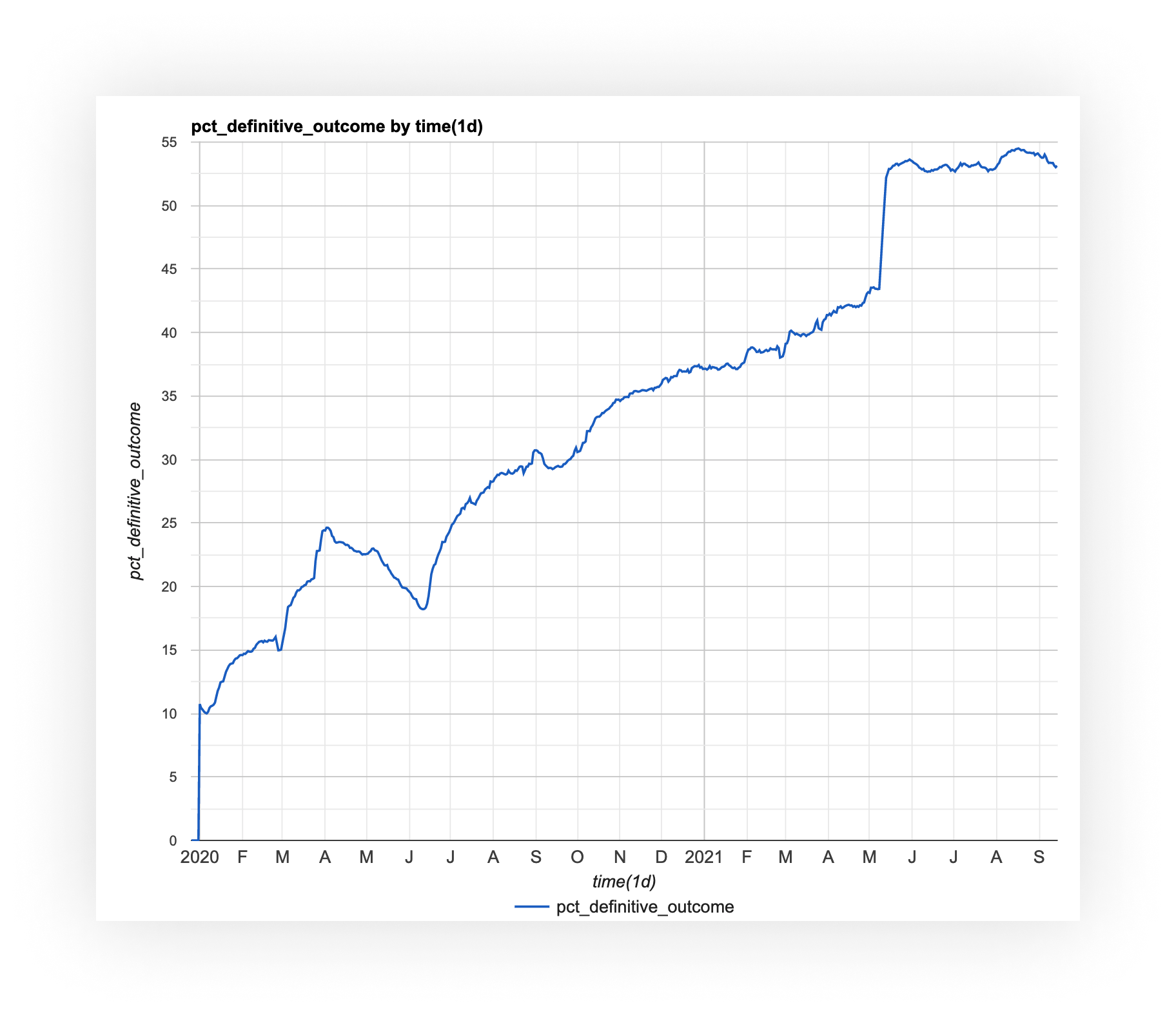
Through all of these solutions, we were able to grow the percentage of job postings with definitive outcomes and hire signals reported.
10% to 54%
(Jan ‘20 - Sept ‘21)
6,658,780 of the 11,745,582 (+56.7%)
Hire signals collected on Indeed in 2020 that my work and my team were responsible for.
WHAT MY COLLEAGUE SAYS ABOUT ME:
Nick Fazzio, Software Engineering Manager
“Prior to Sarah joining our team, I had felt as if engineering was just being delivered designs without having the opportunity to express what engineering constraints might conflict with design goals…Sarah has incorporated engineering earlier in the product design cycle to great effect. She has also picked up many product responsibilities and has worked with our product director in prioritizing our work.”
WHAT I WOULD DO DIFFERENTLY
This was one of my first projects at Indeed and we often took the low-level of effort route. We did not always go back and iterate or make improvements but rather used the learnings for future experiments. We were quite a lean team and didn’t always have the full resources necessary such as Research or Content strategy. In hindsight, I would allocate more time to prioritize high-effort features, aiming to deliver employers an incentive such as a return on investment in exchange for providing us with data.
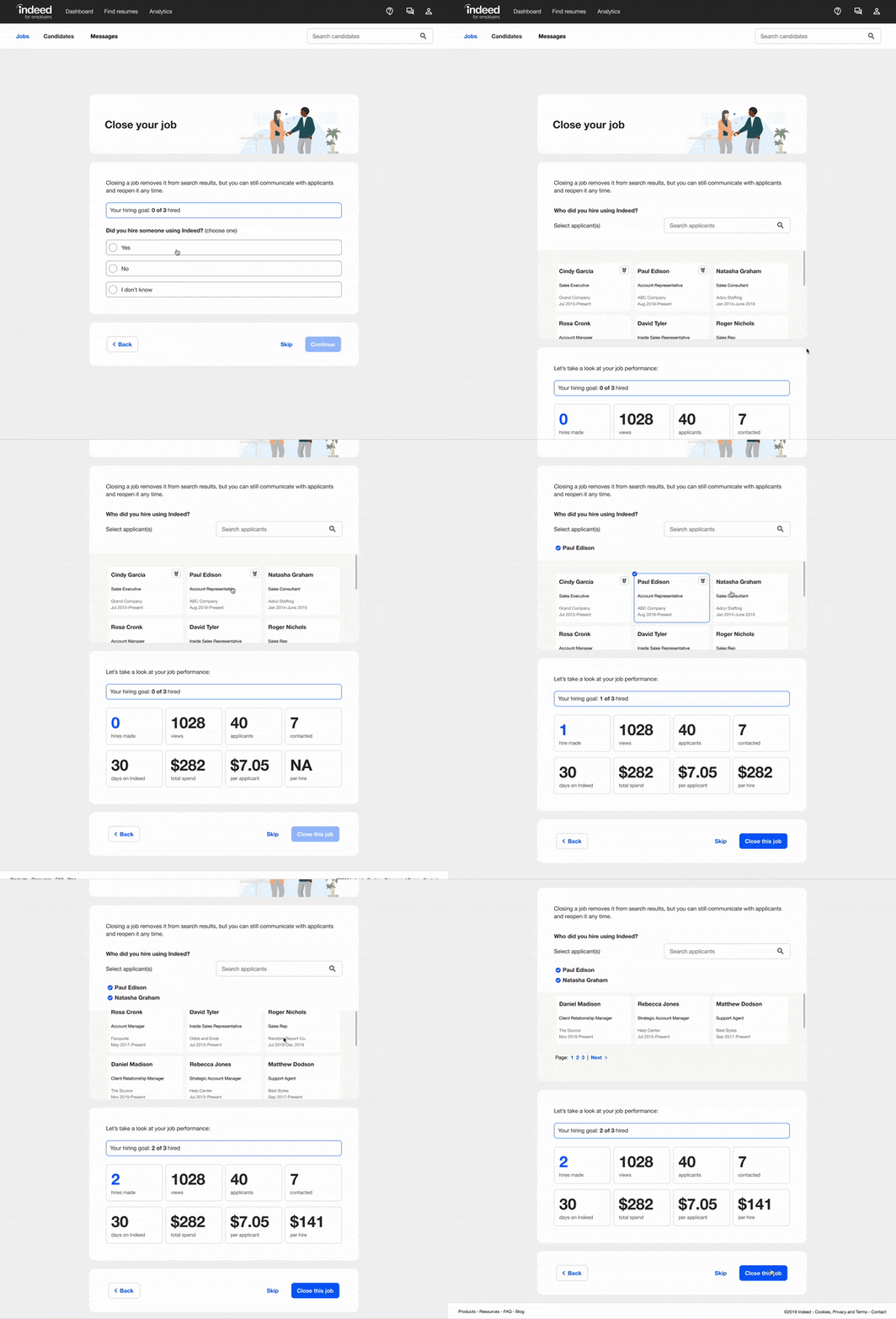
A return-on-investment concept that never got built due to level of effort.